
How to Convert an Attic into a Bedroom in 2026 (Complete Step-by-Step Guide)

You look at your attic and think… this space could be so much more.
But then reality hits — low ceilings, awkward angles, poor lighting — and suddenly, the idea of turning it into a bedroom feels overwhelming.
I’ve seen this happen a lot. People want to convert attic into bedroom, but they either give up halfway or end up with a cramped, uncomfortable space.
The truth is, a successful Attic Bedroom Conversion isn’t about just adding a bed upstairs. It’s about planning, structure, and smart design decisions — especially in 2026 where space optimization matters more than ever.
1. Is Your Attic Even Suitable for an Attic Conversion Bedroom?
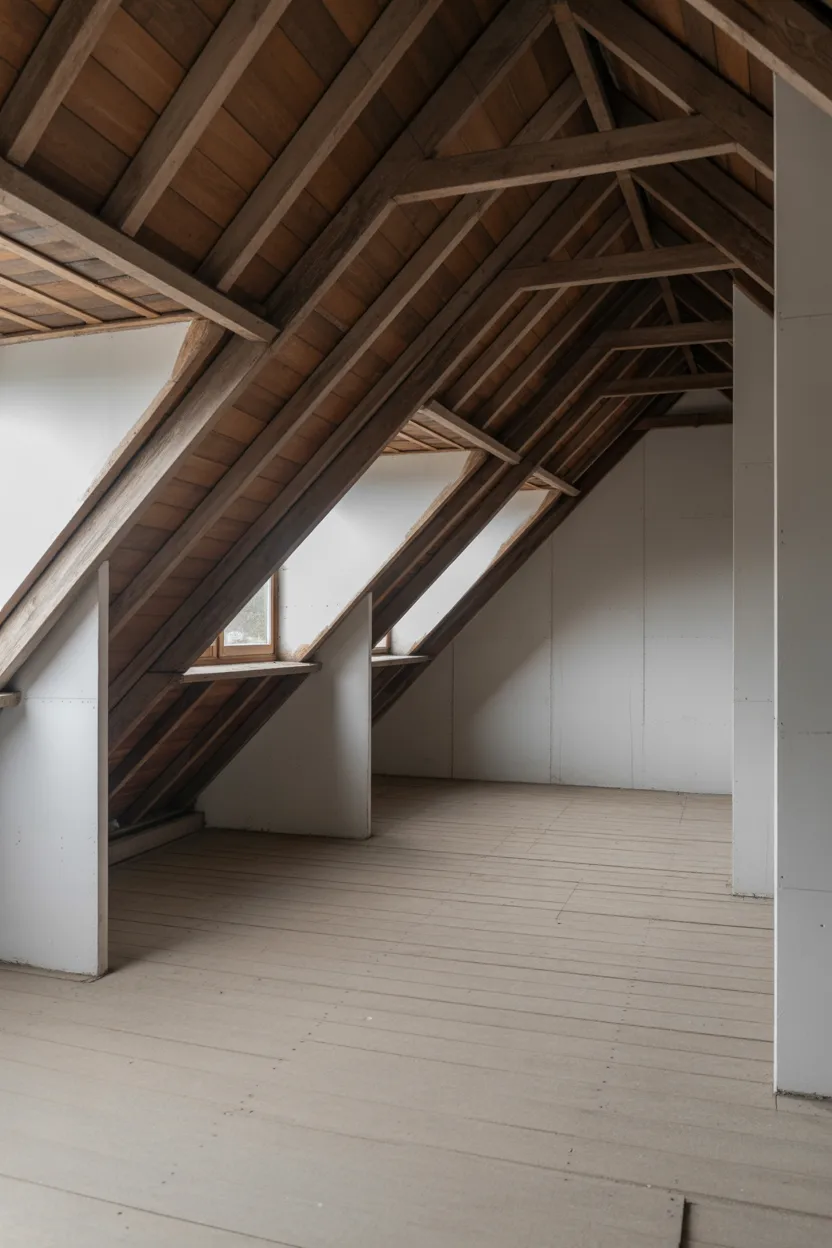
Before you get excited about design, you need to answer one honest question:
Is your attic actually usable?
Not every attic can become a comfortable Room In The Attic. The biggest issue is height. If you can’t stand comfortably in most of the space, forcing a bedroom there will feel frustrating.
A good rule: at least half of your attic should have usable headroom.
Then comes structure. Your attic floor must be strong enough to support furniture and daily use. Many older homes need reinforcement before starting an Attic Conversion.
Ventilation is another deal-breaker. Without proper airflow, your attic bedroom will feel hot in summer and freezing in winter.
If your space feels tight, don’t worry — smart layout strategies from very small bedroom ideas can help you maximize even limited areas.
Key Design Tips
- Check ceiling height first
- Reinforce flooring if needed
- Ensure proper ventilation
- Don’t ignore insulation
Best for: Medium to large attics
Avoid if: Your attic has extremely low clearance
2. Planning Your Loft Conversion Layout (The Foundation Step)
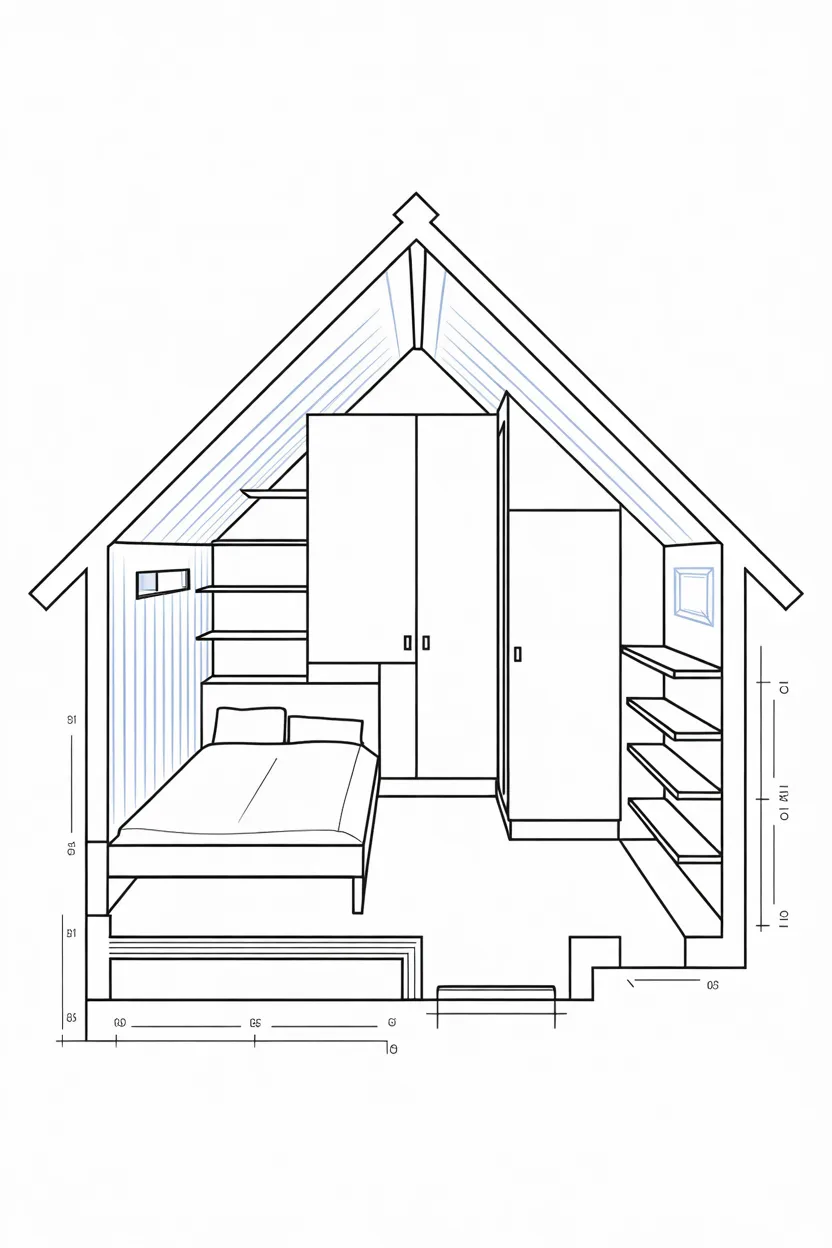
Most attic conversions fail because people skip planning.
A successful Loft Conversion starts with layout. You need to decide where the bed goes, where storage fits, and how movement flows.
Here’s something I’ve learned:
Never place your bed in the tallest area unless you want to waste valuable vertical space. Instead, use high-ceiling areas for walking and low-ceiling areas for sleeping or storage.
This is where Small Space Solutions become essential. Every inch matters.
If you’re unsure how to plan layouts, explore small bedroom layout ideas — many of those principles apply perfectly to attics.
Key Design Tips
- Use low areas for bed or storage
- Keep walking space in high areas
- Plan before buying furniture
- Avoid clutter
Best for: Efficient layouts
Avoid if: You design without measuring
3. Designing Around Slanted Ceilings (The Biggest Challenge)
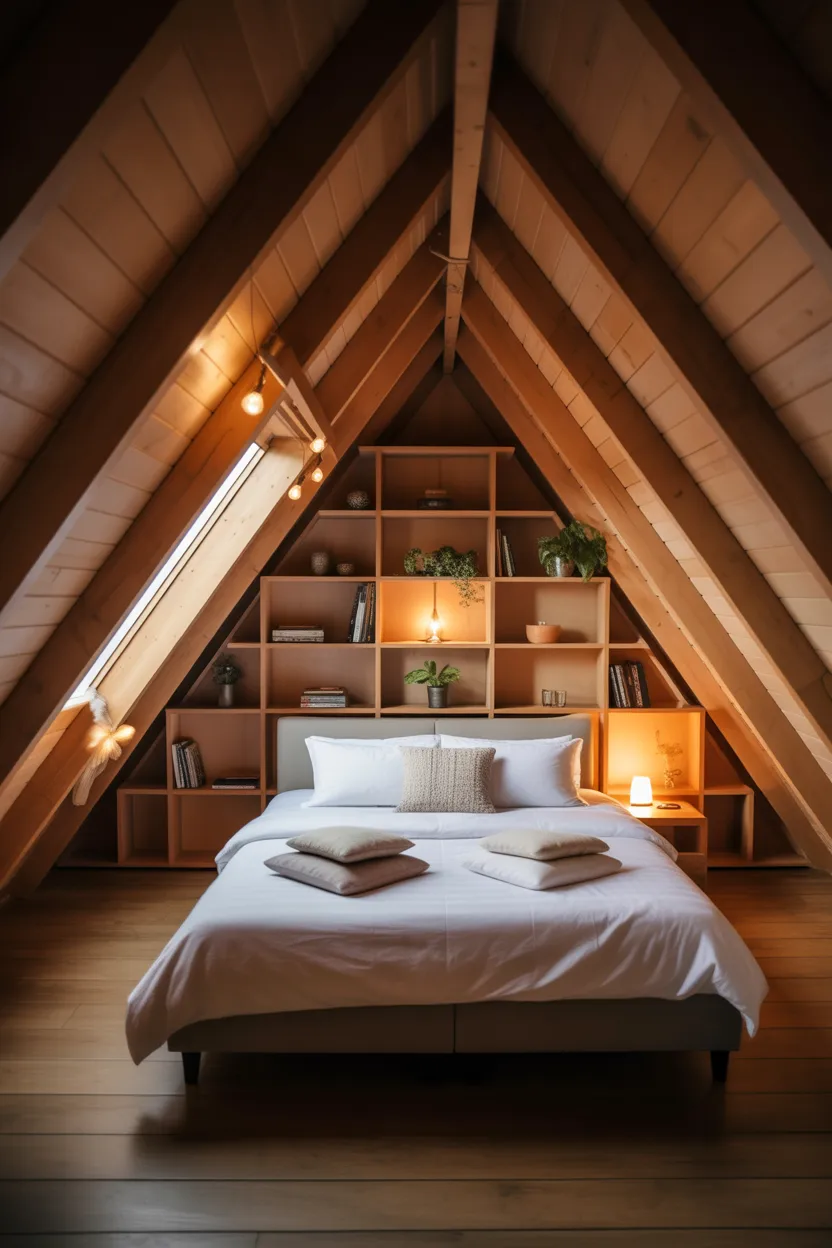
The hardest part of any Attic Room Design is dealing with slanted ceilings.
Most people see them as a problem — but they can actually become your biggest design advantage.
For example, low ceiling areas are perfect for beds, reading corners, or built-in storage. High areas can hold wardrobes or desks.
If you ignore the slope and try to design a “normal” room, it will never feel right.
This is especially important when working with Attic Room Ideas Slanted Walls, where every angle matters.
Key Design Tips
- Embrace the slope instead of fighting it
- Use custom furniture if possible
- Keep tall items in highest areas
- Add lighting to low corners
Best for: Unique attic layouts
Avoid if: You try standard furniture everywhere
4. Lighting Your Attic Bedroom (Natural + Artificial Balance)
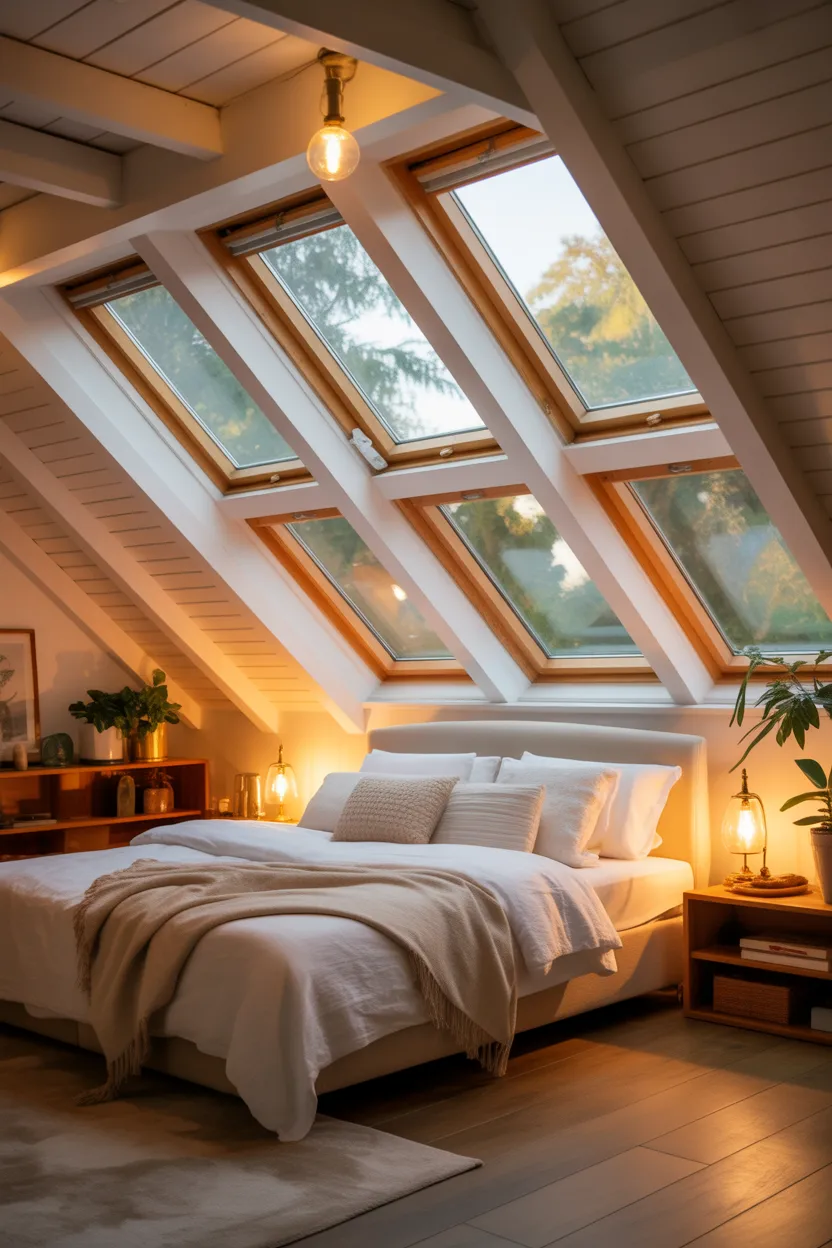
Lighting can make or break your Attic Bedroom.
Attics often lack proper windows, which makes them feel dark and cramped. The solution? Combine natural and artificial lighting.
Dormer windows or skylights are the best upgrades you can make. They bring in daylight and make the room feel larger.
For artificial lighting, avoid a single overhead light. Use layers — bedside lamps, wall lights, and LED strips.
Key Design Tips
- Add skylights if possible
- Use layered lighting
- Avoid harsh white lights
- Highlight corners
Best for: Bright and airy spaces
Avoid if: You rely only on one light source
5. Insulation & Temperature Control (The Hidden Problem)
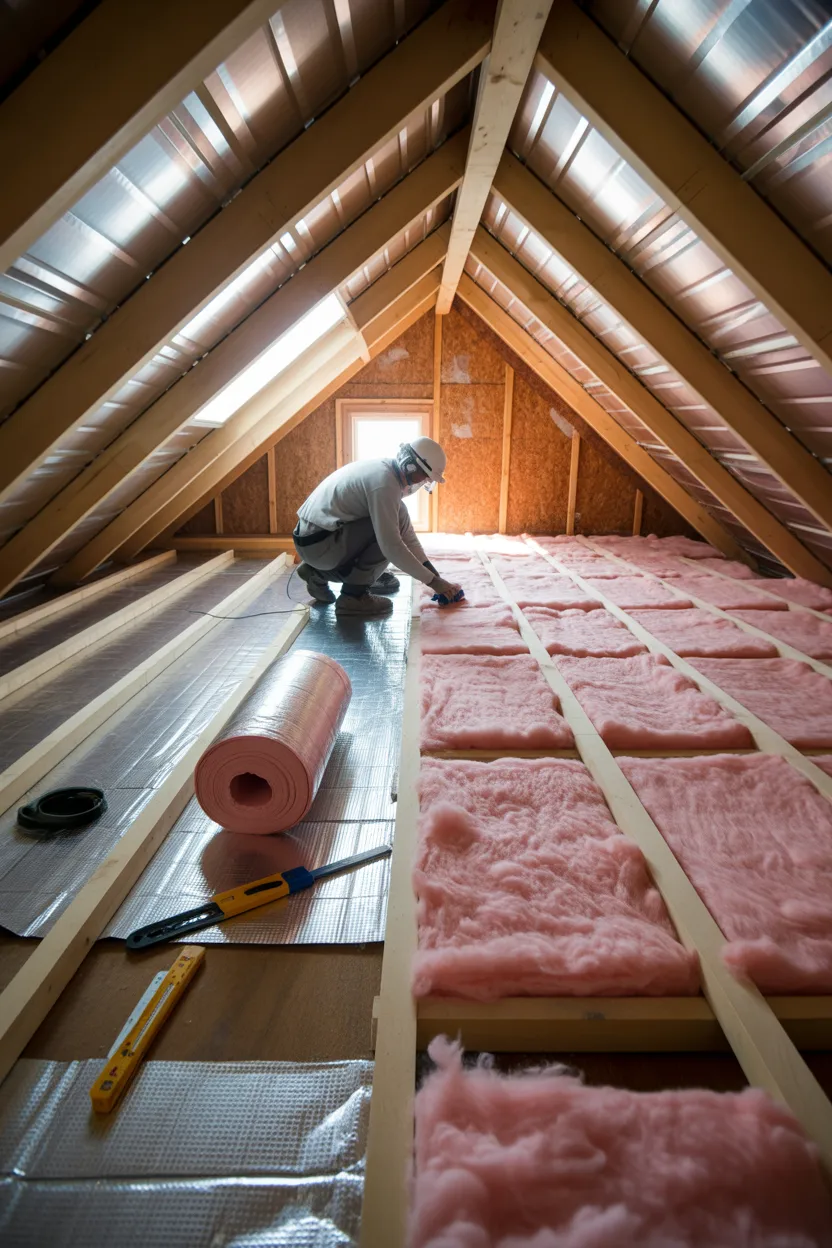
Here’s what most people don’t think about:
Attics are the hottest and coldest parts of a house.
Without proper insulation, your Attic Bedroom Conversion will be uncomfortable year-round.
You need to insulate walls, roof, and floors. This keeps temperature stable and reduces noise.
From experience, skipping this step is one of the biggest mistakes.
Key Design Tips
- Insulate roof and walls
- Use breathable materials
- Add ventilation
- Consider climate
Best for: Year-round comfort
Avoid if: You want a quick cheap conversion
6. Storage Solutions for Attics Turned Into Bedrooms
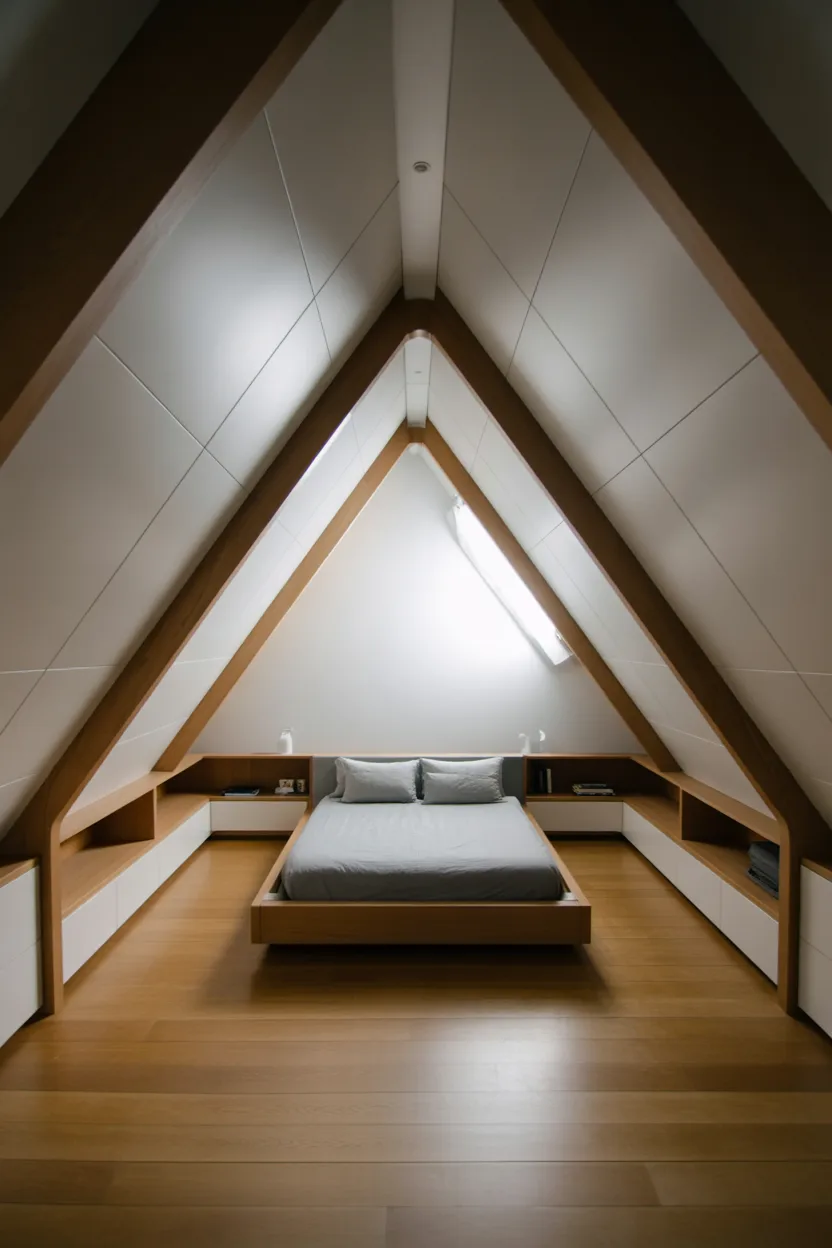
Storage is always tricky in Attics Turned Into Bedrooms.
Because of slanted walls, standard wardrobes don’t fit well. This is where custom or built-in storage becomes essential.
Use under-eaves storage, low cabinets, and hidden compartments.
If you’re dealing with limited space, check storage in extremely small bedrooms.
Key Design Tips
- Use built-in storage
- Maximize under-slope areas
- Avoid bulky furniture
- Keep it minimal
Best for: Organized spaces
Avoid if: You use standard furniture only
7. Choosing the Right Furniture for an Attic Bedroom
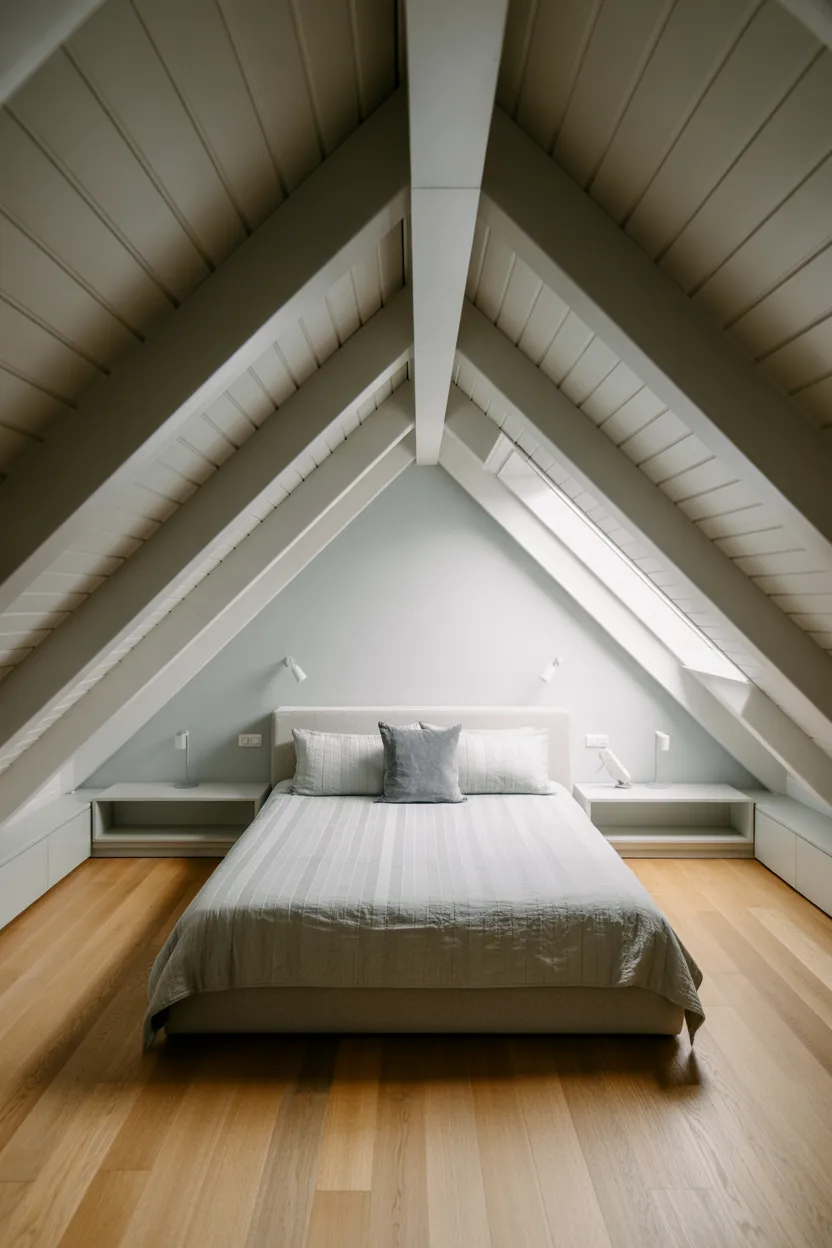
Furniture can either solve or create problems.
In an Attic Bedroom, oversized furniture will make the space feel cramped instantly.
Go for low-profile beds, compact wardrobes, and multi-functional furniture.
If you’re unsure, explore small bedroom design ideas for better choices.
Key Design Tips
- Use low-height furniture
- Choose multi-functional pieces
- Avoid bulky items
- Keep spacing clear
Best for: Small attics
Avoid if: You use heavy furniture
8. Dormer Loft Conversion Bedroom (The Upgrade That Changes Everything)
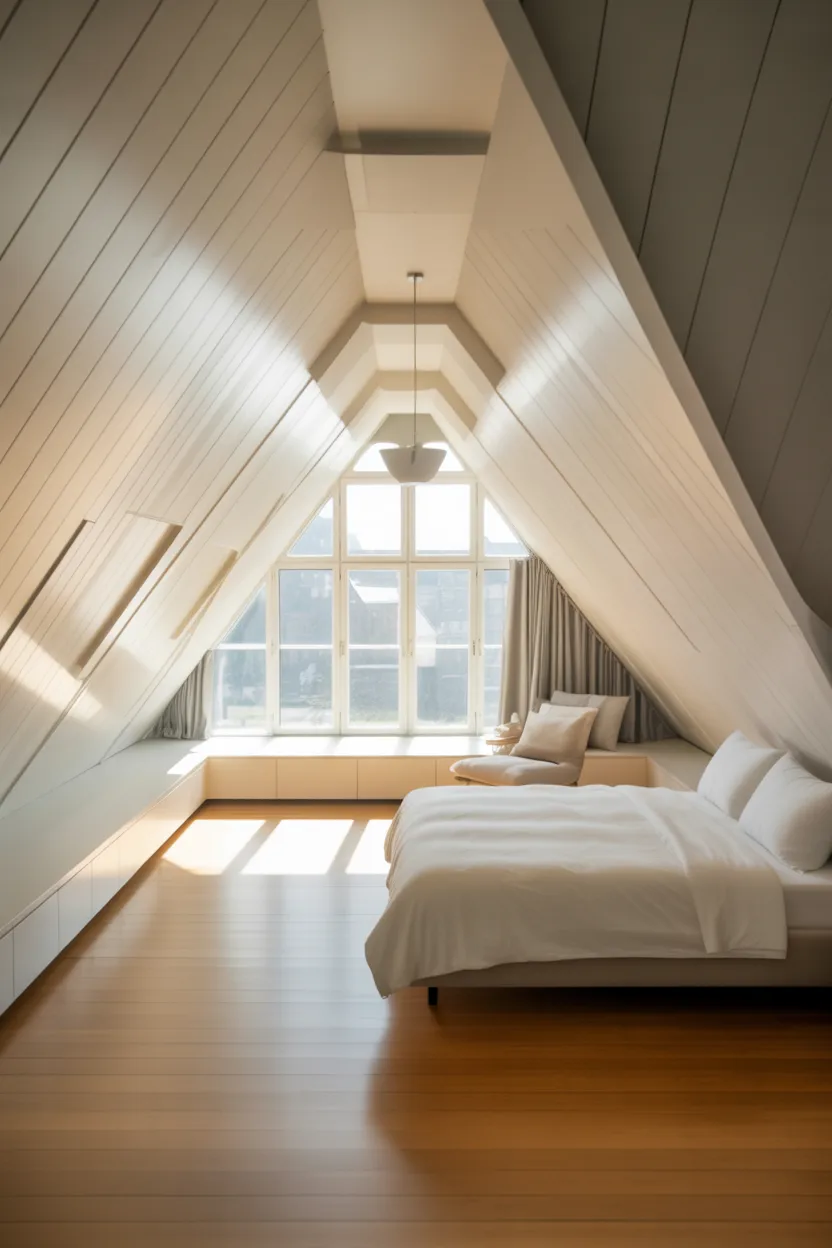
If your attic feels too tight, a Dormer Loft Conversion Bedroom is one of the most powerful upgrades you can make.
Let’s be real — many attic spaces feel cramped because of slanted ceilings. A dormer extension adds vertical walls and headroom, which instantly makes the room more usable.
I’ve seen small attics completely transform with this one change. Suddenly, you can stand comfortably, place furniture properly, and even add windows for natural light.
But here’s the catch — dormer conversions are not cheap. They require structural changes, permissions (in many regions), and proper planning.
So when is it worth it?
- If your attic has very limited standing space
- If you want a full-time Attic Bedroom (not just a guest room)
- If natural light is currently poor
To make the most of the added space, combine this upgrade with layout strategies from small bedroom layout with storage.
Key Design Tips
- Use dormer walls for wardrobes or desks
- Add large windows for light
- Keep design simple to highlight space
- Plan structure before decoration
Best for: Long-term bedroom use
Avoid if: You’re on a tight budget
9. Attic Bedroom Designs Angled Ceilings (Making Awkward Spaces Work)
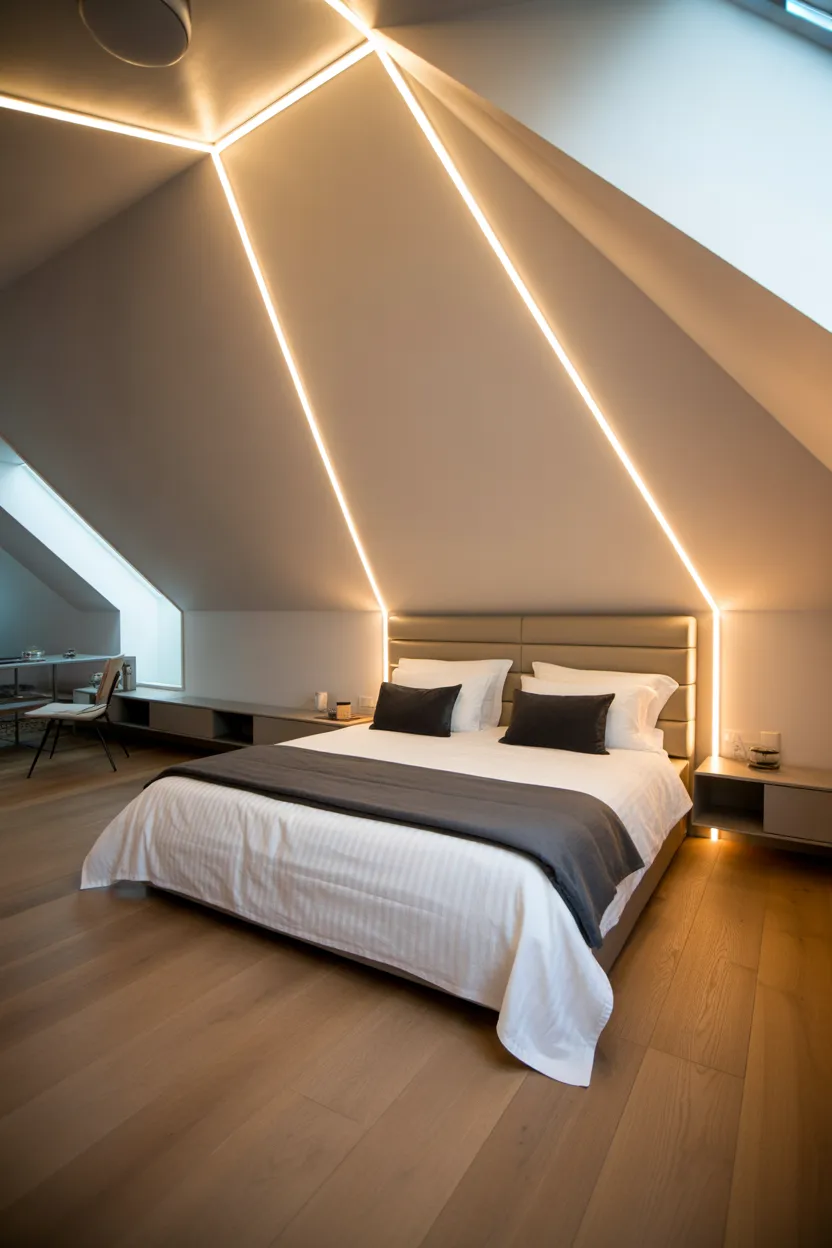
Let’s talk about the reality — angled ceilings are unavoidable in most attics.
But instead of treating them as a limitation, the best Attic Bedroom Designs Angled Ceilings turn them into a feature.
For example, placing your bed under a slope creates a cozy, tucked-in feel. Adding LED strip lighting along the angle can highlight the architecture beautifully.
From experience, the biggest mistake people make is trying to “hide” angles. That usually makes the room feel unnatural.
Instead, design with the ceiling, not against it.
Key Design Tips
- Use angles as design features
- Add lighting to highlight structure
- Place low furniture under slopes
- Keep tall furniture in open areas
Best for: Unique, cozy designs
Avoid if: You try to flatten the layout
10. Styling Your Attic Bedroom (From Basic to Beautiful)
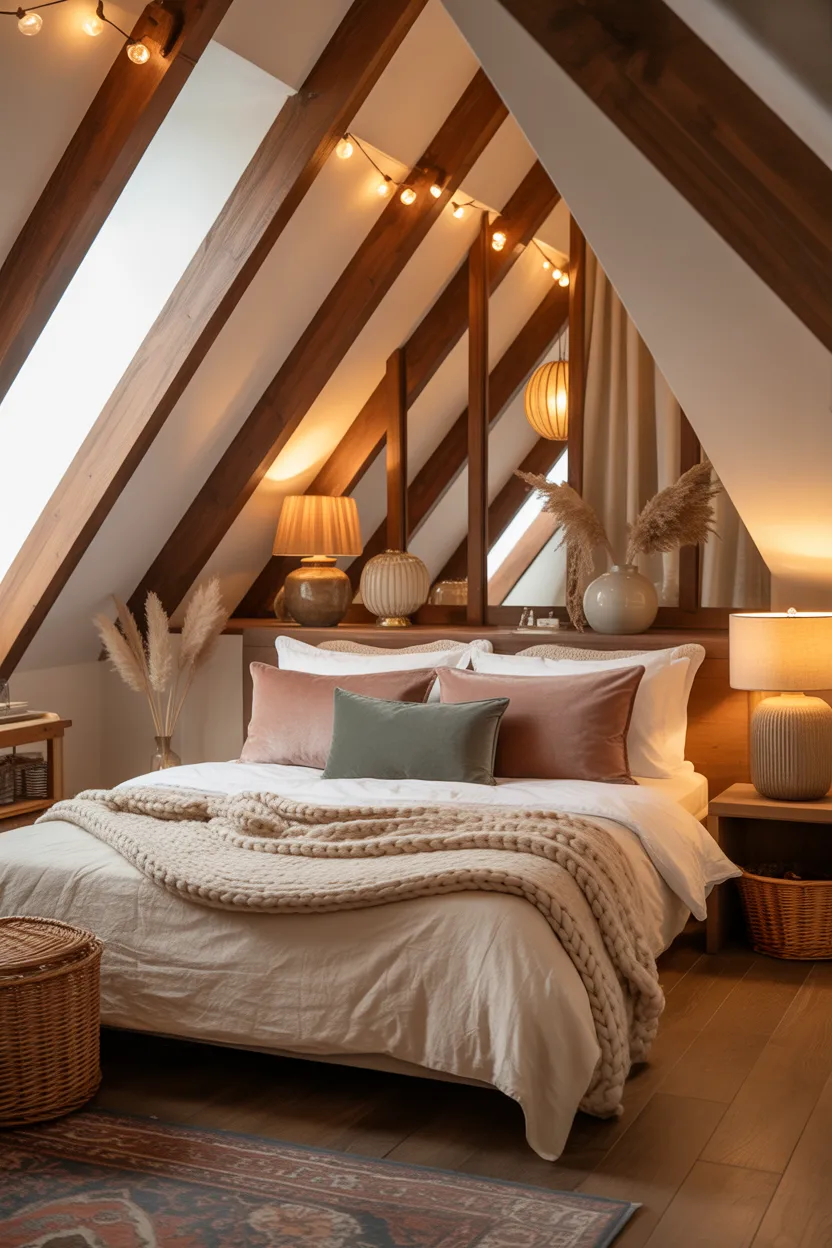
Once the structure is done, styling is what makes your Bedroom In The Attic Ideas feel complete.
This is where many people rush — they finish construction and quickly throw in furniture and decor.
But styling requires intention.
Start with a theme: modern, cozy, rustic, or minimal. Then build around it with colors, textures, and decor.
If you’re unsure where to begin, explore 10 inspiring bedroom ideas for direction.
Key Design Tips
- Choose one clear style
- Match colors across elements
- Add layers (rugs, curtains, bedding)
- Avoid random decor
Best for: Cohesive interiors
Avoid if: You mix too many styles
11. Small Space Solutions for Attic Bedrooms (Critical for Success)
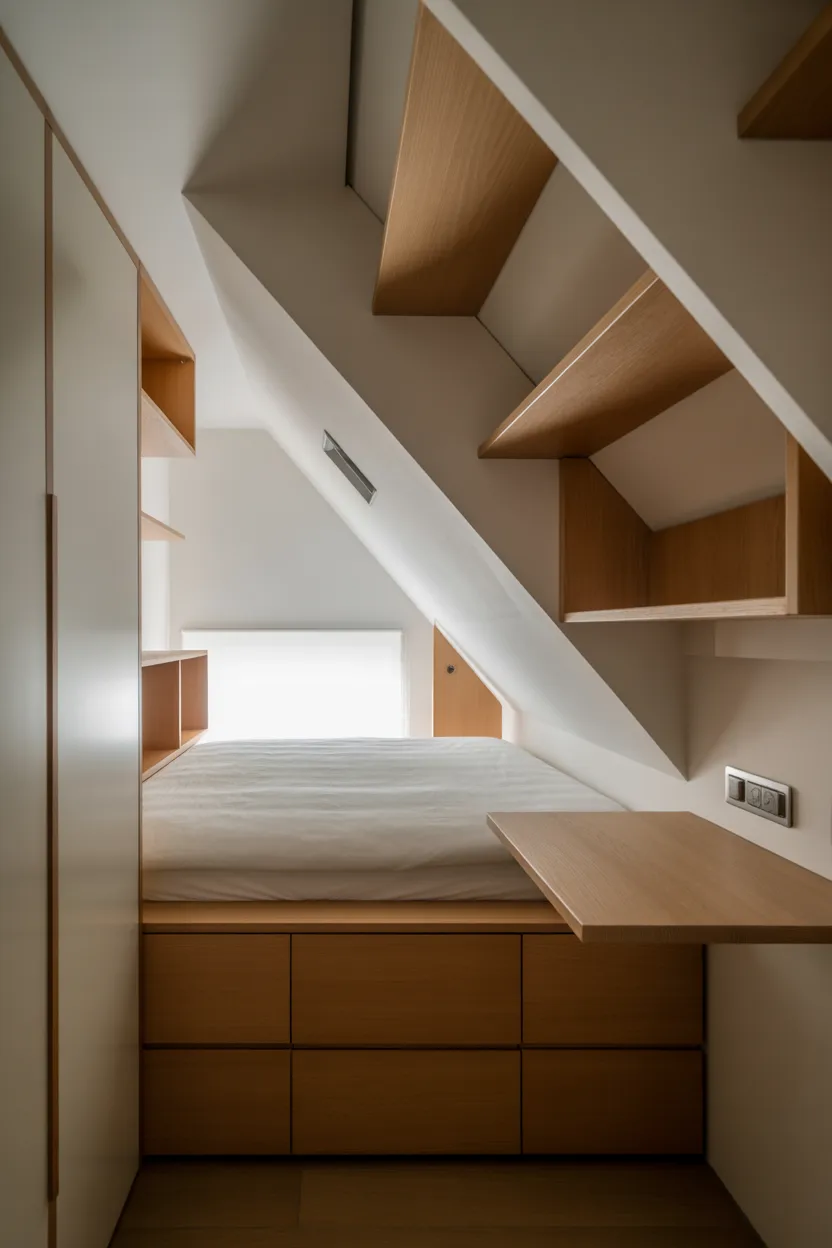
Most attic bedrooms are not large — which means Small Space Solutions are not optional, they’re essential.
You need to think vertically, use multi-functional furniture, and avoid unnecessary items.
One of the best tricks I use is zoning. Even in small attics, you can create a sleeping zone, storage zone, and reading corner — without overcrowding.
If your space is extremely limited, check extremely small bedroom ideas for advanced solutions.
Key Design Tips
- Use vertical storage
- Keep furniture minimal
- Define zones clearly
- Avoid clutter
Best for: Compact attics
Avoid if: You overdecorate
12. Common Mistakes in Attic Conversion Bedroom (Real Problems)
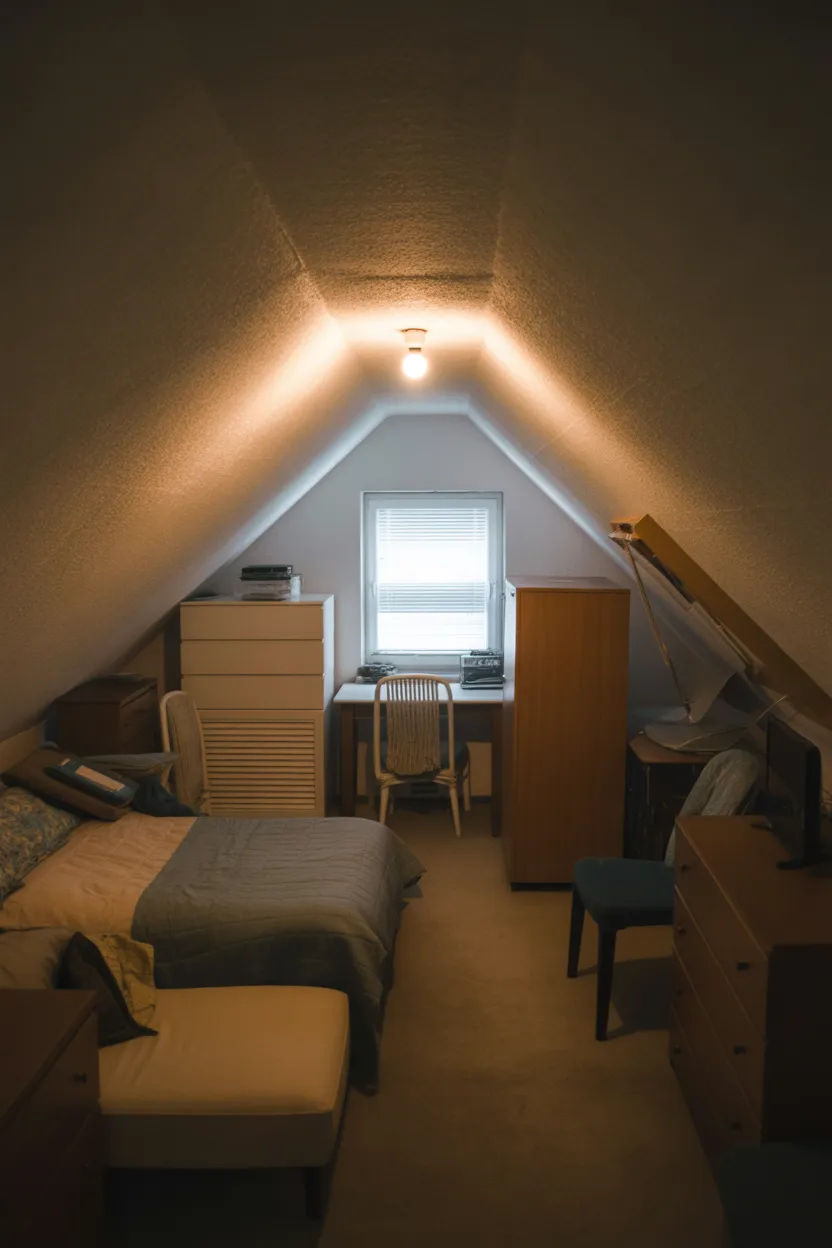
Let’s talk about what actually goes wrong.
I’ve seen many attic projects fail — not because of budget, but because of bad decisions.
Here are the most common mistakes:
- Ignoring ceiling height
- Using oversized furniture
- Poor lighting setup
- Skipping insulation
- Overcrowding the space
These mistakes turn a good idea into an uncomfortable room.
If you want to avoid design errors, explore mistakes to avoid in a small bedroom — many apply directly to attic spaces.
Key Design Tips
- Plan before building
- Measure everything
- Prioritize comfort
- Keep it simple
Best for: Avoiding costly errors
Avoid if: You rush the process
13. Cost & Budget Reality (What You Should Expect in 2026)
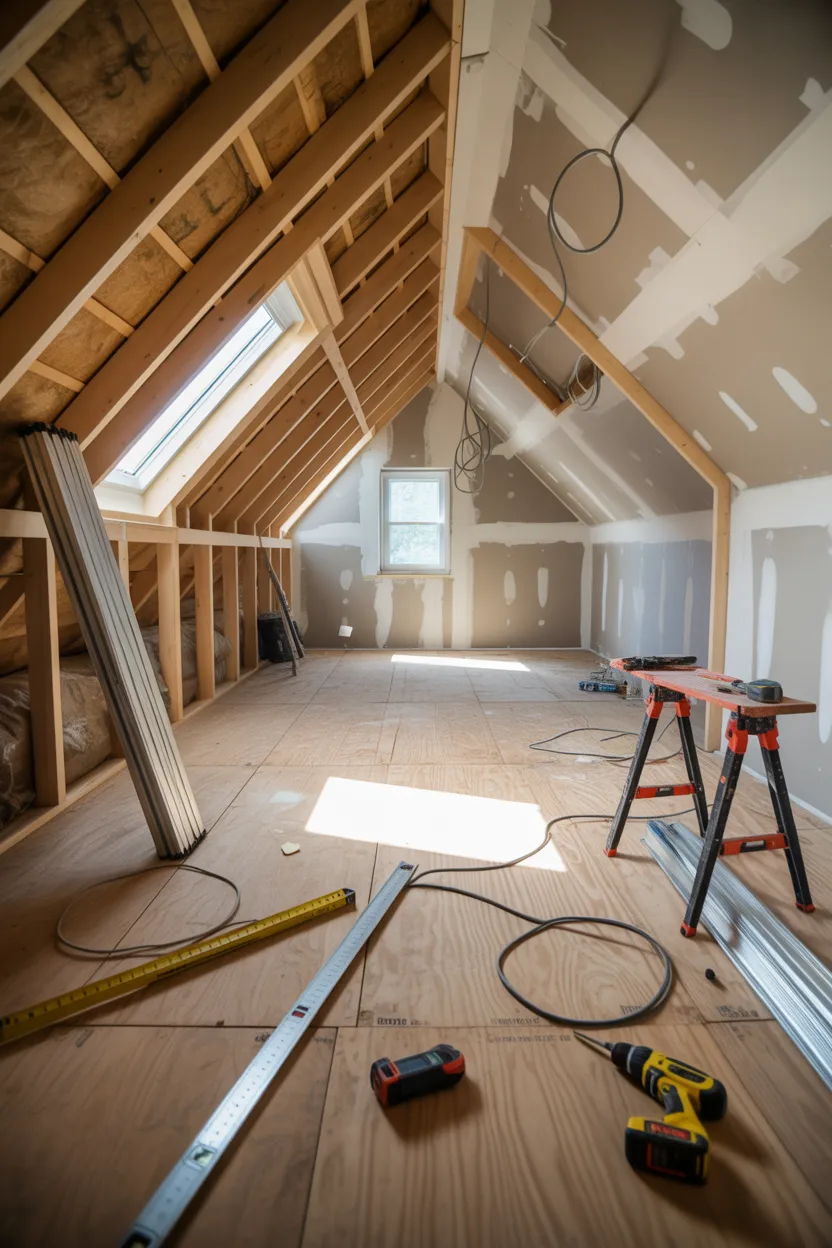
Let’s be practical — converting an attic isn’t cheap.
A basic Attic Conversion Bedroom can cost significantly depending on structure, insulation, and design.
- Basic conversion: low cost but limited comfort
- Mid-range: balanced design + functionality
- High-end (with dormer): premium but long-term value
From my experience, the biggest mistake is trying to save money on structural work. That always backfires later.
Key Design Tips
- Invest in structure first
- Don’t compromise insulation
- Plan budget before starting
- Keep design flexible
Best for: Long-term investment
Avoid if: You want instant results
14. Final Setup: Making Your Attic Bedroom Feel Complete
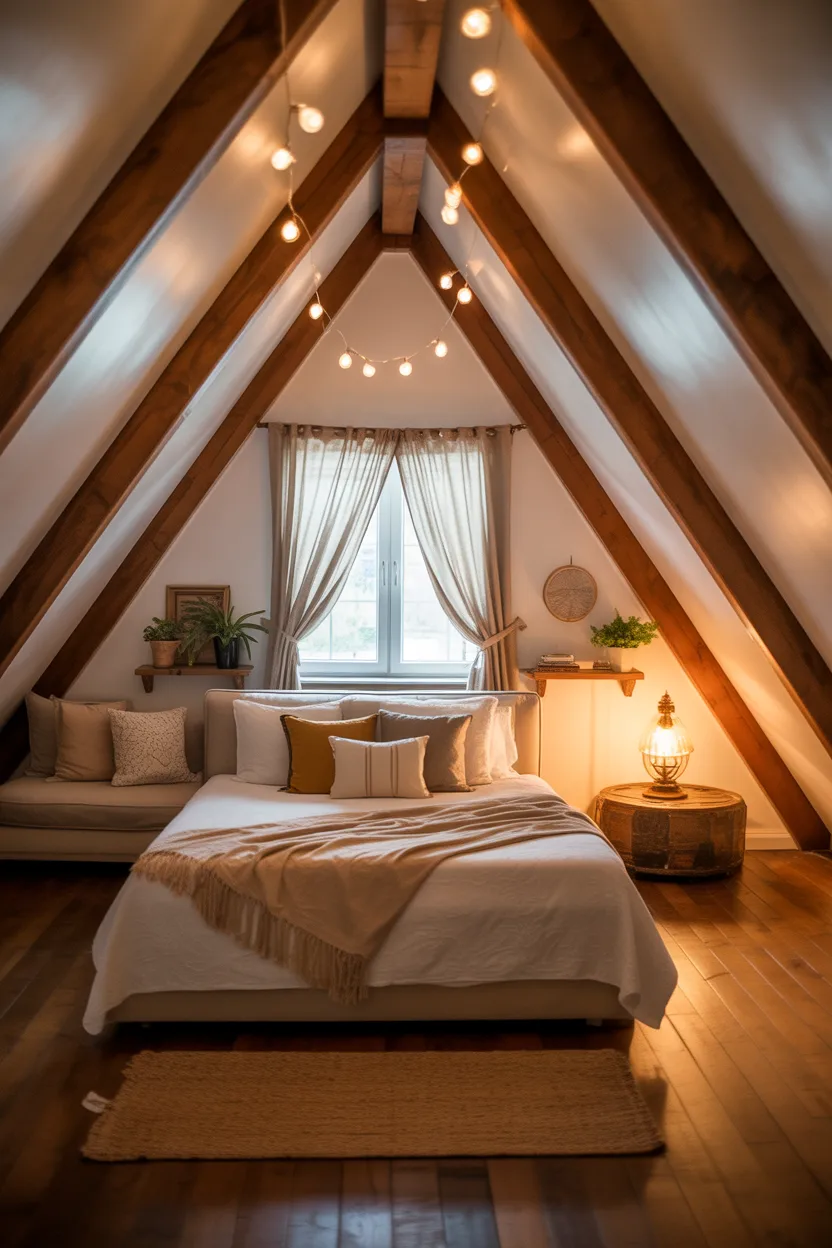
This is where everything comes together.
A great Attic Ideas Bedroom setup isn’t just functional — it feels like a real bedroom, not a converted space.
Add finishing touches:
- Soft lighting
- Comfortable bedding
- Wall decor
- Personal elements
If done right, your attic won’t feel like an afterthought — it will feel like the best room in the house.
Key Design Tips
- Add personality
- Keep comfort priority
- Balance decor and function
- Avoid overdoing
Best for: Complete transformation
Avoid if: You stop at basic setup
FAQs
1. Is converting an attic into a bedroom worth it?
Yes — it adds usable space and increases home value if done correctly.
2. What is the biggest challenge in attic conversion?
Ceiling height and layout planning are the biggest challenges.
3. Do attic bedrooms get too hot?
Yes, without proper insulation and ventilation.
4. Can small attics be converted into bedrooms?
Yes, with smart layout and storage solutions.
Conclusion
After working on multiple attic projects, I can confidently say this —
converting an attic is one of the most rewarding upgrades you can make.
But it’s also one of the easiest to mess up.
I’ve seen people rush into it and regret it. And I’ve seen others plan carefully and end up with their favorite room in the house.
If you’re serious about this, don’t treat it like a quick makeover. Treat it like a proper design project.
Plan the layout. Fix the structure. Respect the space.
That’s how you turn an unused attic into a bedroom that actually works.


